
allTunes/Mp3Sparks/AllOfMp3 Business model
Originally published on my old blog at cumps.be on August 8, 2007.
Everyone knows them, the controversial Russian-based online music store.
This won’t be another post questioning the legality of the company, there are plenty of those around. What I do want to have a look at however, is it’s technological business model and compare it to the mainstream alternative. I created a dummy user at Mp3Sparks, and started looking at the technical implementation.
Mainstream music stores, like iTunes for example, let you download the songs you want for a fixed price at a fixed quality. A great advantage of this method, is that you have the freedom to hand pick only those songs you really want. But you are stuck with whatever format the store has to offer, at whatever quality they have predefined for it.
Mp3Sparks however, also allows you to hand pick your favorite songs, at the quality you choose! This is a very big difference, and advantage. To prevent people from getting all songs in a lossless format (like FLAC), you pay for the file size of the song. This way people can pay a bit extra for better quality (bigger size, more expensive) or save some money by choosing a lower quality, to play in their car for example.
As a end-user, choosing the quality would be my favorite business model, since it allows me to have the songs I’ve bought in the highest possible quality, giving me the option to convert it down whenever I like, if needed. This is something I could never do with the fixed quality, since you can’t magically get back the removed data from the compressed song.
I don’t know to which extent music industries are capable of dealing with this ‘file size business model’, but I would most certainly be far more attracted to buying music online if the music industry used this. After all, they could set the price for the highest quality equal to the price of a physical CD in a music store. That way, it would simply be an online delivery medium, offering a bigger choice then my local music store.
One thing is certain, I have tried iTunes, and there is no way I’ll ever buy another song from it, since I’m stuck to the quality they choose, and the DRM put onto it, preventing me from using it on all the devices I own.
To give you an idea of my music management, I have all my physical music discs stored on an external hard disk in a lossless format, which I listen to in Winamp. When I plug my iPod in, I have a script stored on it, which will automatically compare the content of my iPod with my library, and encode the missing files to MP3 of a lower bitrate. If I buy myself an advanced Hi-Fi installation in the future, I will be adding a SqueezeBox to it, which allows streaming lossless files straight to it without loss of quality. Flexibility is power!
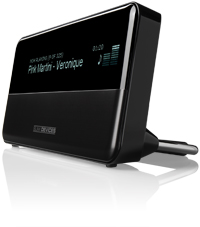
If any record company/music store reads this post, this is what the Mp3Sparks site lists:
- MP3, 128, 160, 192, 256, 320kbps.
- WMA7, 128, 160, 192kbps.
- WMA8, 128, 160, 192kbps.
- WMA9, 128, 160, 192, 256, 320kbps.
- OGG , 128, 160, 192, 256, 320kbps.
- MPEG-4, 128, 192, 256kbps.
- Monkey’s Audio, lossless.
- OptimFROG, lossless.
- FLAC, lossless.
- WAVE.
That is what I call choice. Attach a different price to each of them, give the choice to your customers how much they are willing to pay, and get rid of the DRM on it. The first company to adapt this business model and be more trustworthy from a legal point of view, will have my deepest respect, and probably some of my money.
In the end, adapting this model strangely enough has a strong resemblance with how it used to be in the old days. You bought a disc, without DRM, you could use it wherever you want, you had the best quality, and you payed for it and were happy. If you didn’t want the best quality, you would listen to a radio. This is your chance, music industry, to make money from the ones who would settle for just the lower quality of a radio, gaining positive PR reputation while doing it.
For now, I’m stuck listening to radio or buying discs if I want the original sound, since Mp3Sparks is regarded as not legal, and no other music store uses this technological approach. And I won’t be paying for lower quality, no matter if you can hear the difference or not. It’s a principles thing.
How do you feel about this, as a user? Would you buy more music this way?



You May Also Like
Moved Site - United Domain
After 3 years of blogging on weblogs.asp.net, I've taken the big decision of moving out.
Virtual PC Differencing Disks Hierarchy
A long time ago, I talked about Differencing Disks in Virtual PC.
What happened on August 27, 2001?
Internet Explorer 6 was officially released.