
Studnet
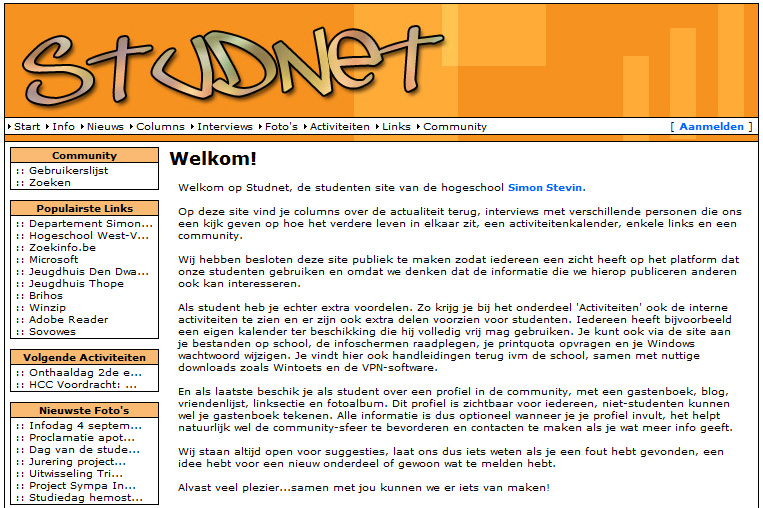
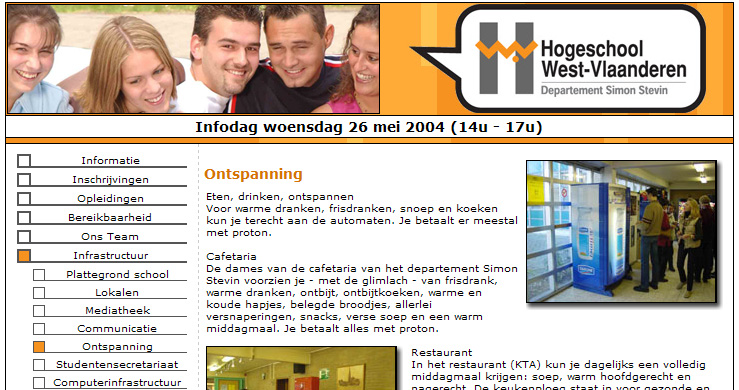
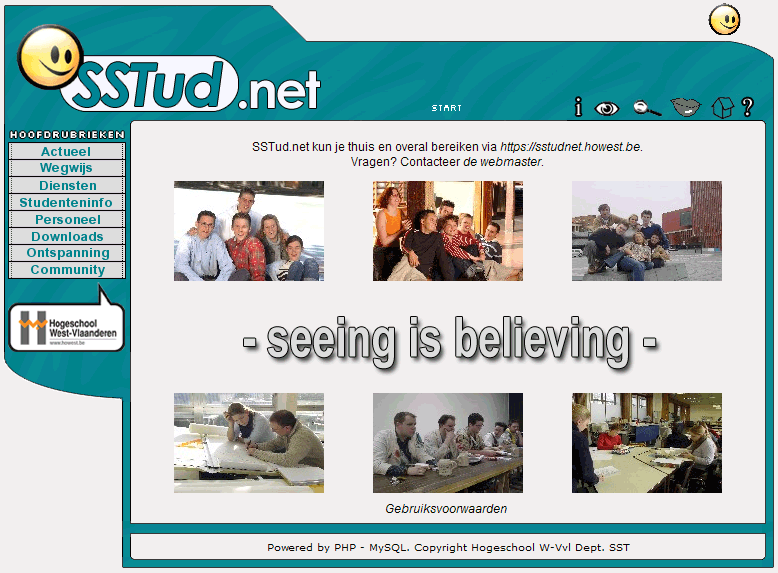
Studnet was the student website of the Simon Stevin department of Hogeschool West-Vlaanderen, now Howest, at studnet.howest.be. Bert Goethals and I, both applied informatics students there, rebuilt it from scratch in the summer of 2004, in our own time, and it opened on 1 September 2004, at the start of the academic year. It replaced SSTud.Net, the department’s intranet I had built in 2002.
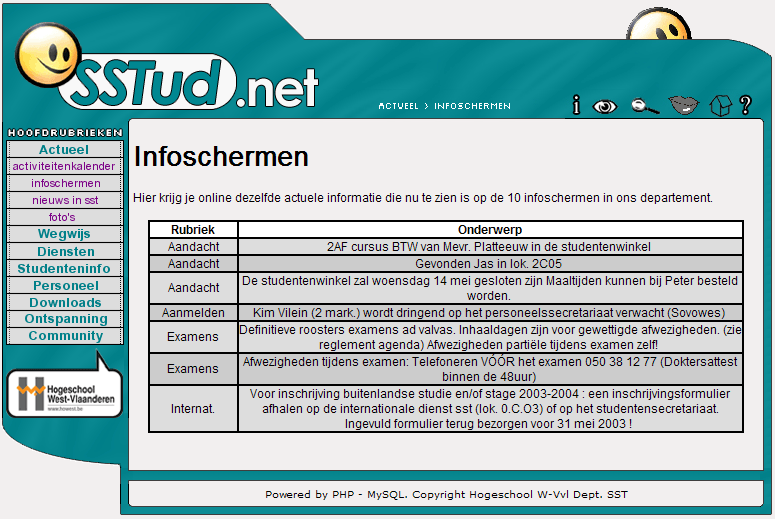
SSTud.Net, the intranet. The first version was an intranet only students and teachers could reach, in PHP and MySQL on Windows 2000 and IIS 5. It sat behind a secured connection that checked access against the Windows domain, so the site knew who was logged on and showed each person their own content. It put the school’s info screens online, alongside news, a guestbook, downloads, and expandable menus that worked in every browser.
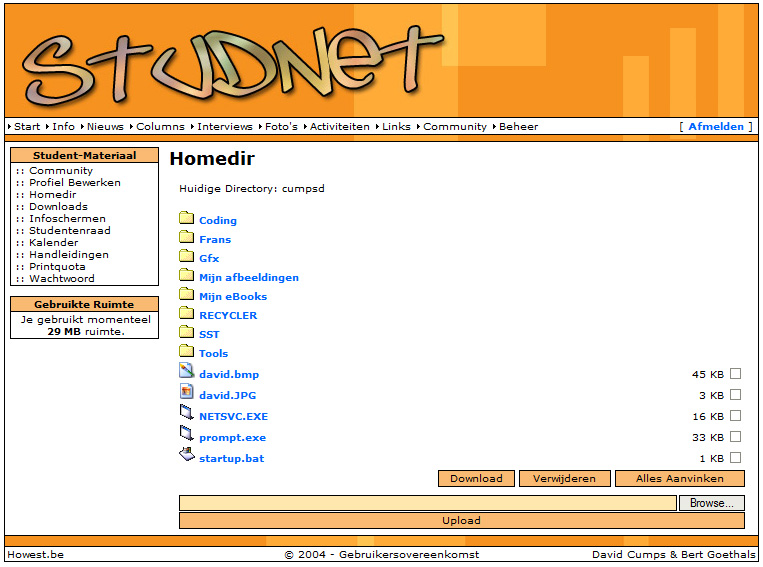
Rebuilt for students. After a couple of years, Bert and I proposed to the department’s management that we take over and rebuild the site around the students. The new Studnet was ASP.NET on the same Windows 2000 and IIS 5 servers, with MySQL, and clean addresses without file extensions. Much of it was now public: news, interviews, columns, a calendar of student activities, photo albums from info days, proclamations and the Day of the Student, links and an RSS feed. Students who logged in got the rest: the info screens, their home directory from home to download and upload files, their print quota, changing their Windows password, manuals and downloads for the VPN, the exam bank, and the course documents from Dokeos, the school’s e-learning platform. The site tied the school’s existing systems together in one place.
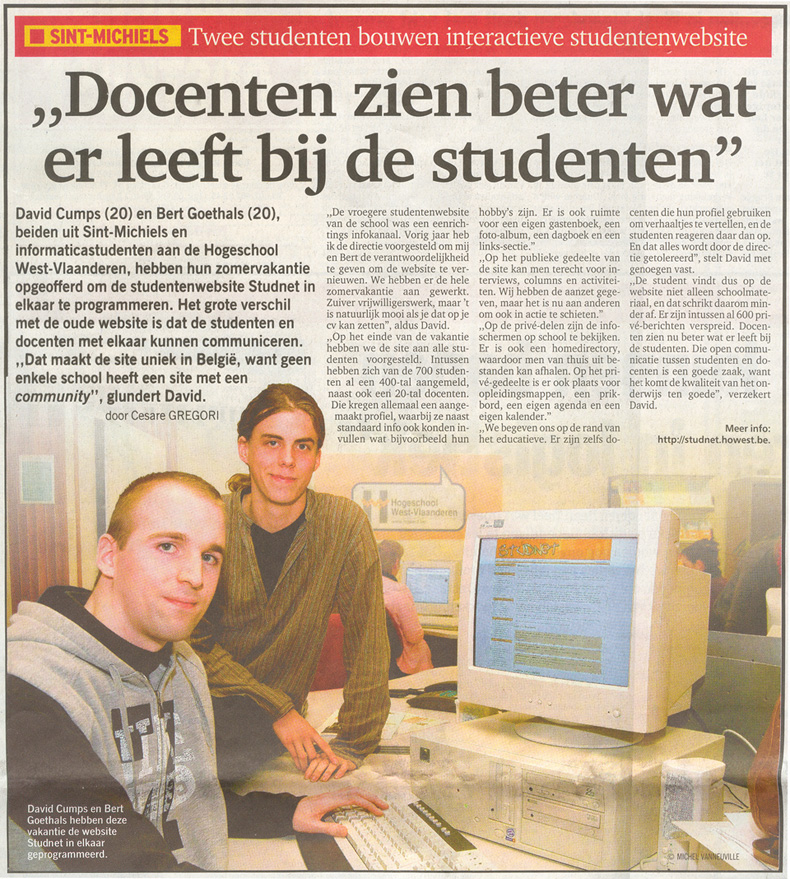
A community. The part we were proudest of was the community. Every student and teacher could get a profile with a guestbook, a photo album, a blog, a friends list and their own links. Teachers used their profiles to tell stories, and students reacted, so, as I told the newspapers, teachers could see better what was going on among their students. Within weeks some 400 of the department’s 700 students and about 20 teachers had signed up, and they had sent each other 600 private messages. As far as we knew, no other school in Belgium had a site with a community.
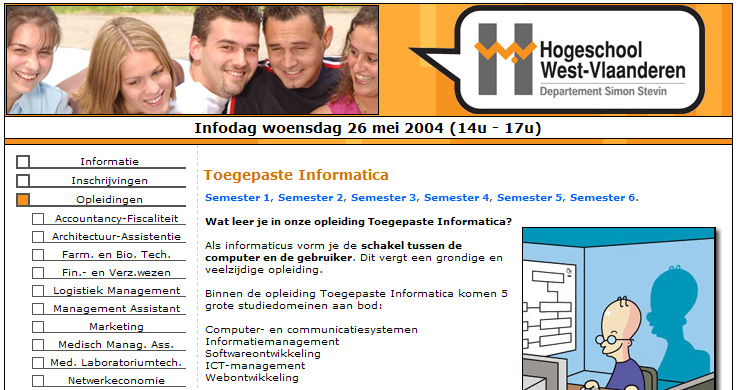
The department’s public site. That same year the department asked me to build its public website, at simon.stevin.be, in ASP.NET with C# and MySQL. The content, the menu structure, the courses with their semesters and modules, and the latest news all lived in the database, and URL rewriting gave every page its own address with an .sst extension, after the department’s abbreviation, which made the addresses easy to remember. Student applications to the department doubled in the time after, a rise the department credited to the site.
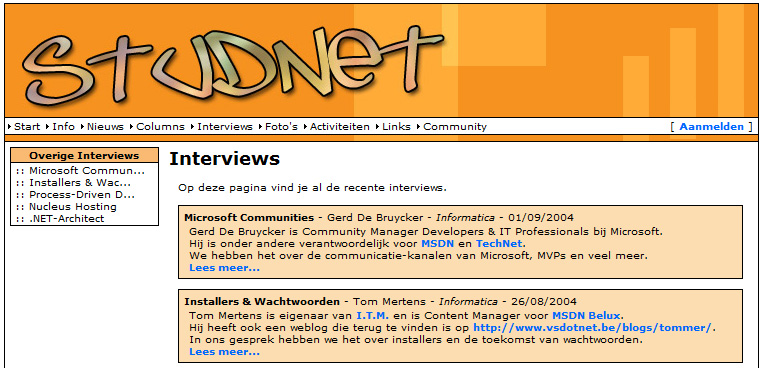
Interviews. For the public part I interviewed people from the IT world for the students: Jan Tielens on the work of a .NET architect, Wouter Sergeyssels on a hosting company, Patrick Verbruggen on processes and the future of programming, Tom Mertens on installers and passwords, and Gerd De Bruycker and Mieke De Ketelaere on Microsoft’s communities and its academic programme. More in the post New Student Site.
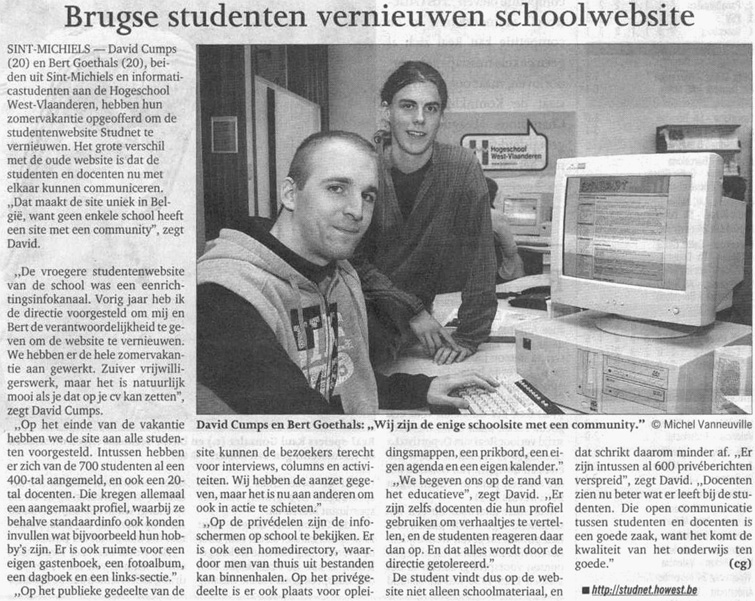
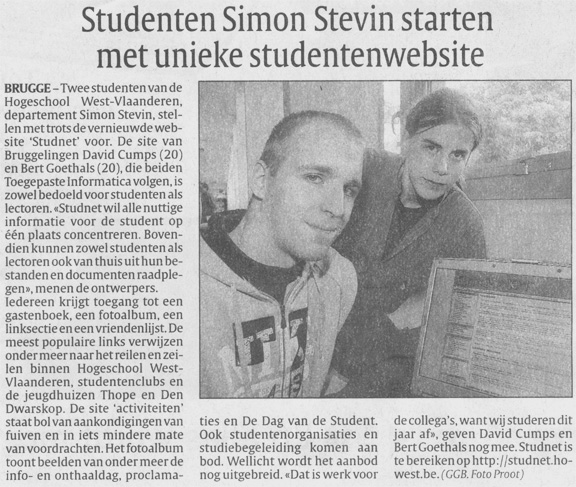
In the papers. In October 2004 Het Nieuwsblad, De Standaard and Het Laatste Nieuws all wrote about Studnet, under headlines such as “Docenten zien beter wat er leeft bij de studenten” (teachers see better what’s going on among students) and “Studenten Simon Stevin starten met unieke studentenwebsite” (Simon Stevin students launch a unique student website). Bert and I graduated that school year, so growing the site further was up to the students after us.
Technologies: ASP.NET, C#, PHP, MySQL, IIS 5, Windows 2000, Active Directory, JavaScript, HTML, CSS, RSS, Photoshop.

Being responsible for public relations in a college of higher education we (5 students and me) built up the Intranet for students. No doubt David was the key figure to realize that. The last 6 months David programmed both my personal website and my website for teachers. David is extremely reliable, very efficient, modest and moreover: he’s able to work in a team because he’s social too.



You May Also Like

How This Blog Is Served
The machinery behind the words you're reading: Hugo, an unprivileged nginx, a strict CSP, and a deploy script.

Keeping the Old Addresses Alive
Nobody migrates email in one day. Fetchmail, a receive-only alias domain, and permanent redirects bridge the old world into the new one.

Making Roundcube Not Look Like 2012
Webmail is the face of the platform, so it got a Gmail-shaped skin, real calendar and contacts integration, and some money spent on polish.