
Aribus
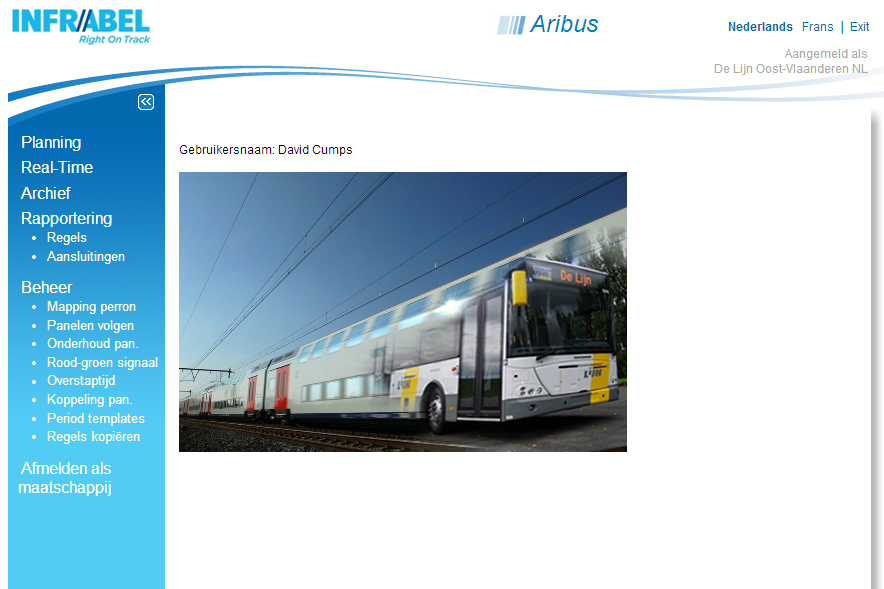
Aribus is the system I built in 2010 for B-Holding, then the holding company above Infrabel and the Belgian railways NMBS. At stations where a bus connects to a train, it keeps the bus in step with the train: when a train runs late, Aribus updates the departure panel and signal at the stop so the bus waits instead of leaving empty-handed. I built it with a small team of developers at NMBS-Holding, taking on the Scrum Master role for part of the project.
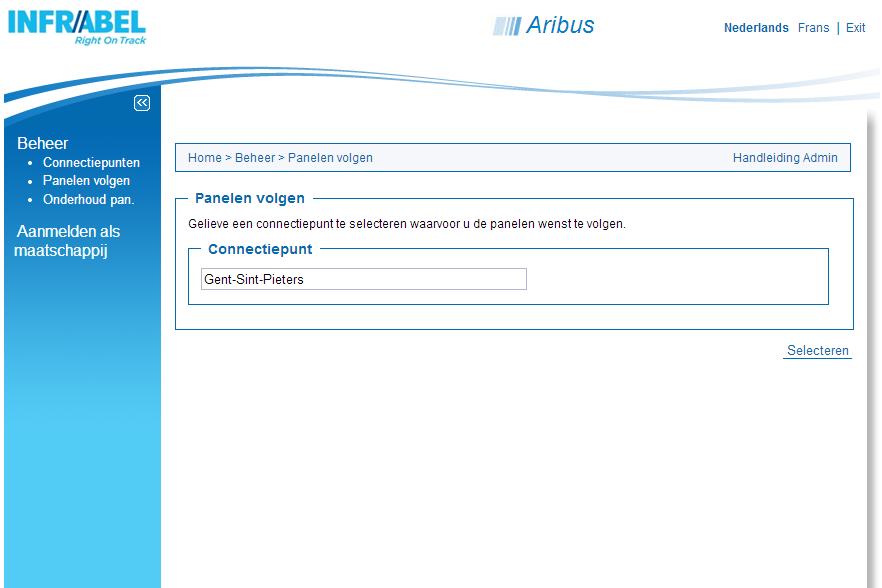
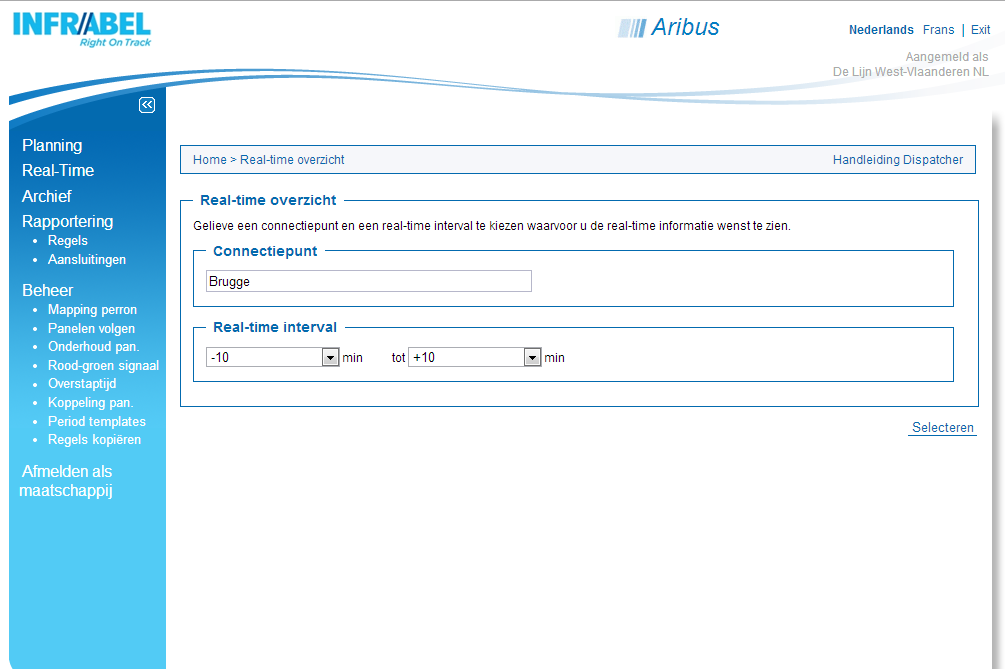
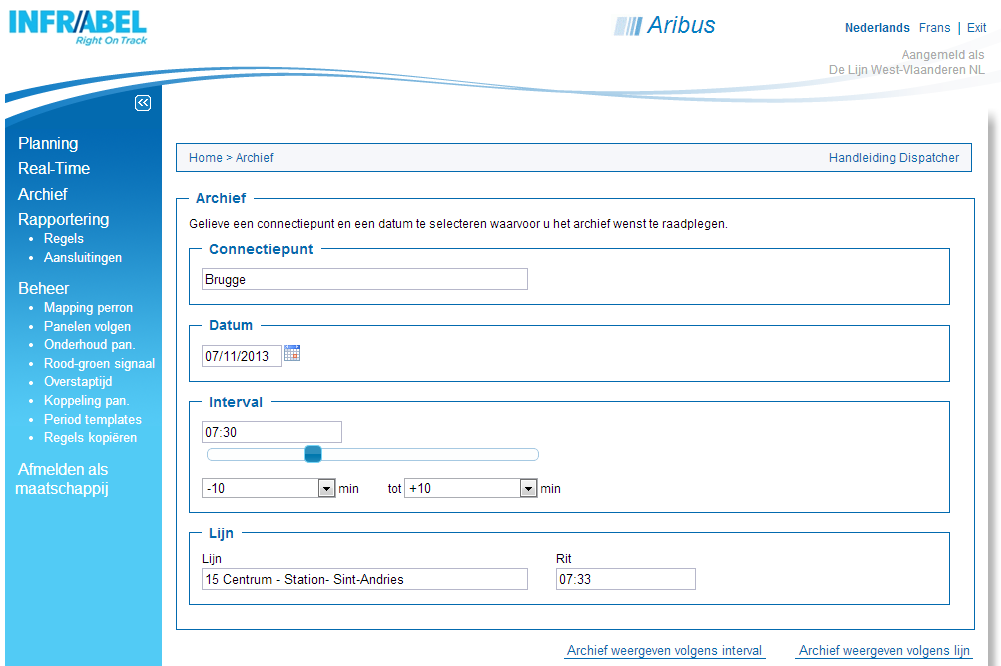
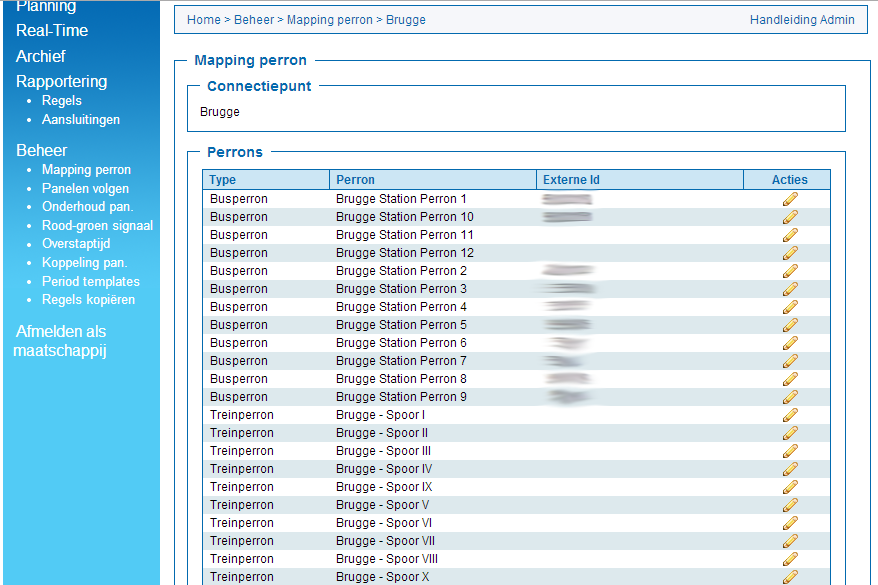
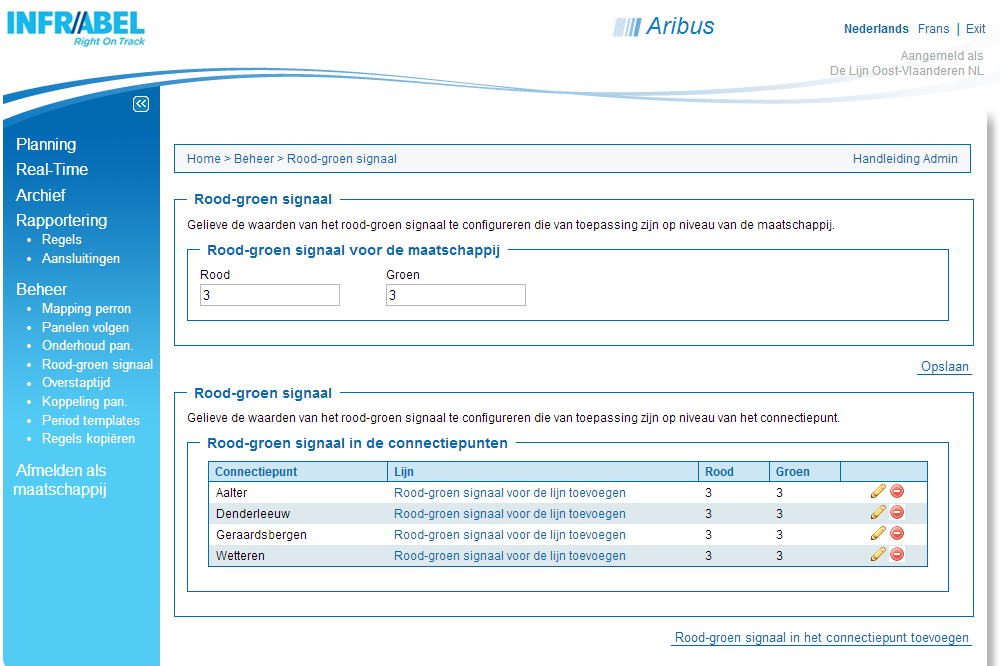
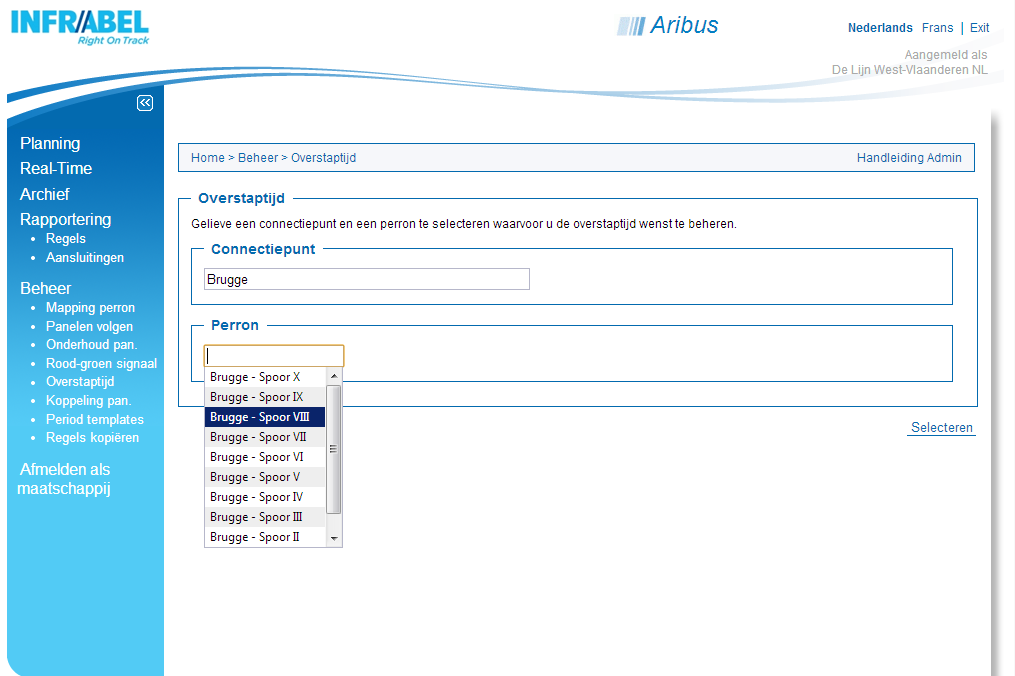
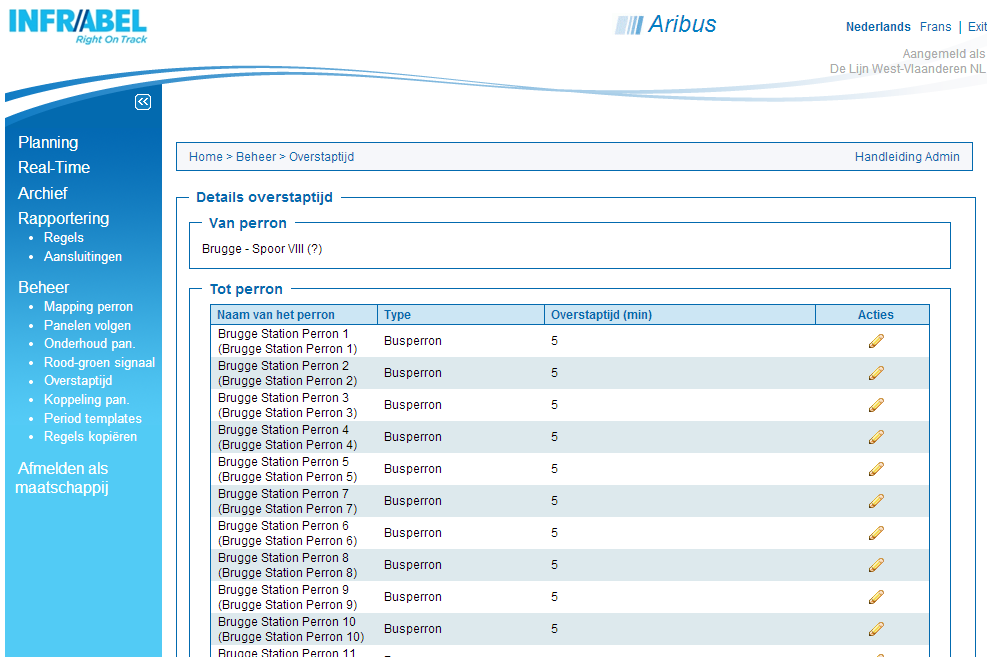
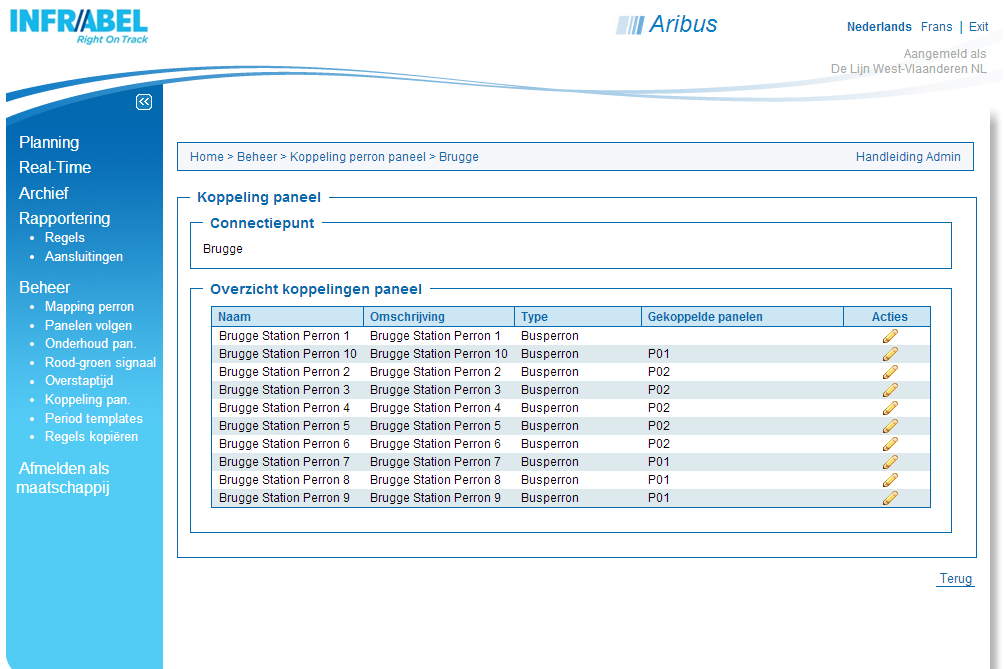
Connection rules. Planners set up the connections in an admin section: for each connection point, a rule links an arriving train route to a departing bus route, with the time window and days of the week it applies, a walking distance between platform and stop, and a red or green signal rule that decides whether the bus should wait. Rule sets can be copied from one period to another, and a simulation mode lets a planner check a rule before publishing it.
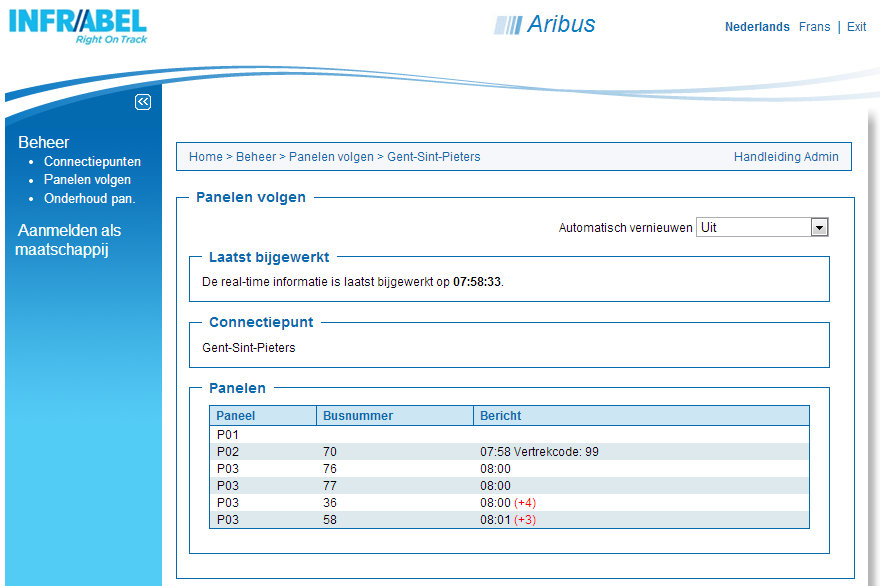
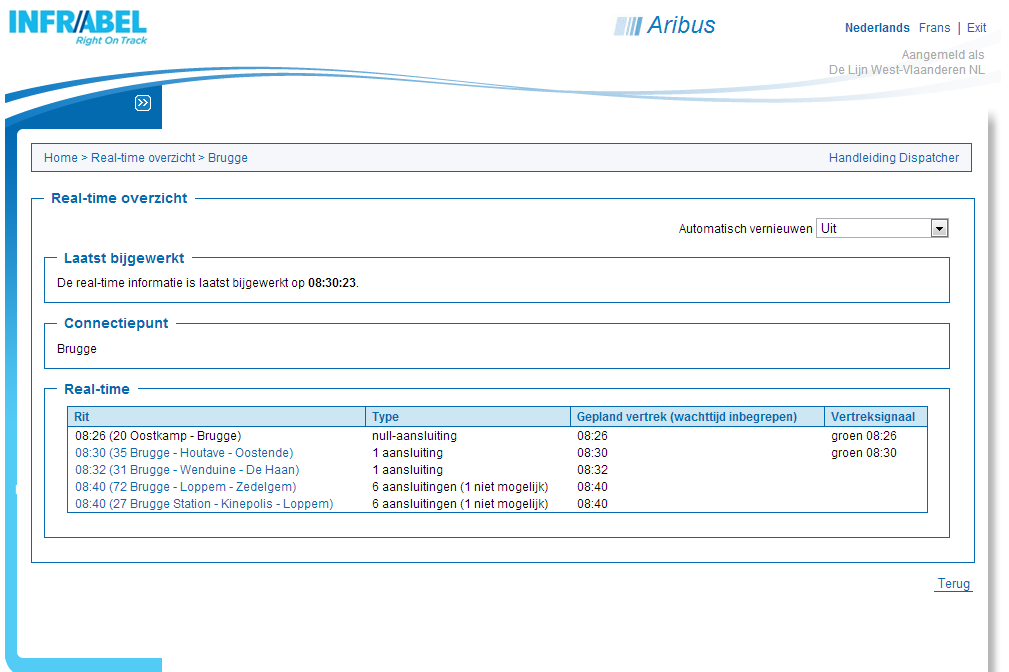
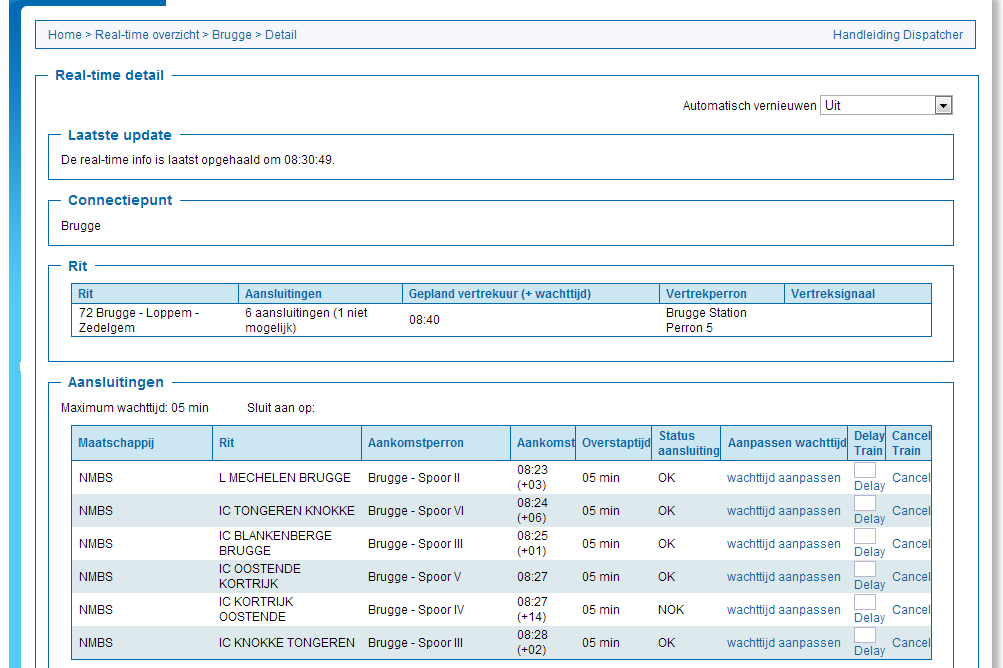
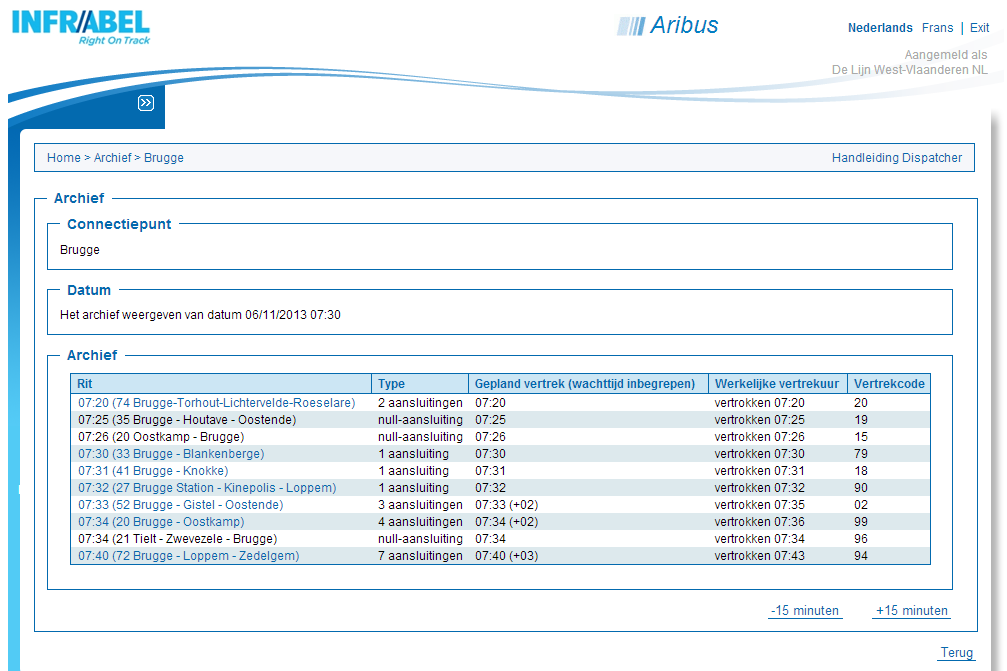
Real-time trains, not timetables. A service pulls real-time arrival and departure information per station from the national railway’s real-time feed, rather than relying on the fixed timetable. Combined with the connection rules, it decides each minute which bus stops need an updated departure time and signal, which a monitoring screen lets the team follow live.
Out at the bus stop. A Windows Service called PanelEngine fetches the due updates and queues them by priority per panel and modem; another service, ModemController, dials out and drives the physical display at the stop over that modem connection, switching its backlight, polling its status and pushing the vehicle number, time, waiting time and departure code in the format each panel type expects. A heartbeat service and a log cleaner keep the fleet of these background services monitored and their logs from piling up.
The admin site. The ASP.NET WebForms site uses jQuery and jQuery UI for its grids, autocomplete fields and modal dialogs, talking to two WCF services in JSON for planning and administration. Reports on the rules and connection pairs, in French and Dutch, are built as RDL reports rendered through ReportViewer. Data sits in Oracle, reached through ODP.NET and Microsoft Enterprise Library, on top of BRail.ApplicationFramework, the group’s shared internal .NET framework for data access, validation, security, caching and logging.
Technologies: C#, .NET Framework 3.5, ASP.NET WebForms, jQuery, jQuery UI, WCF, JSON, Windows Services, Oracle, ODP.NET, Microsoft Enterprise Library, SQL Server Reporting Services, MSTest, Moq, WatiN, Resharper, Scrum, TFS, Team City.

David is a highly trained developer with great motivational skills. He was the Scrum Master for our project and fulfilled this role with great dedication.
David is a high efficient and pragmatic worker. He delivers high quality code, using his strong technical knowledge, detailed testing qualities and driven by his perfectionism to deliver a finished product. During this time, I really enjoyed working with him in the same team.

I’ve had the pleasure to work with David at NMBS-holding. During our numerous technical discussions on the way home I’ve got to know him as someone who keeps his eyes, ears and mind open. This combined with a profound knowledge of .NET, best practices and a good common sense. In short he is someone that gets things done in the best possible way.
I recommend David for team leading. First for his skill to manage a team (3 developers) and secondly to achieve challenges in a hard technical environment.



You May Also Like

The Family Vault: Vaultwarden
A Bitwarden-compatible password manager on the platform: split routing around end-to-end encryption, and the honest state of the rollout.

One URL for Everything: the Family Dashboard
The family dashboard, the fastest epic of the project, and container status tiles without handing anyone the Docker socket.

How This Blog Is Served
The machinery behind the words you're reading: Hugo, an unprivileged nginx, a strict CSP, and a deploy script.