
ESS
ESS is an ERP system I built for Firmware in the summer of 2015, together with Firmware’s own developers. It was their first Angular project, so coaching them was part of the job; by the end they had written half of the commits.
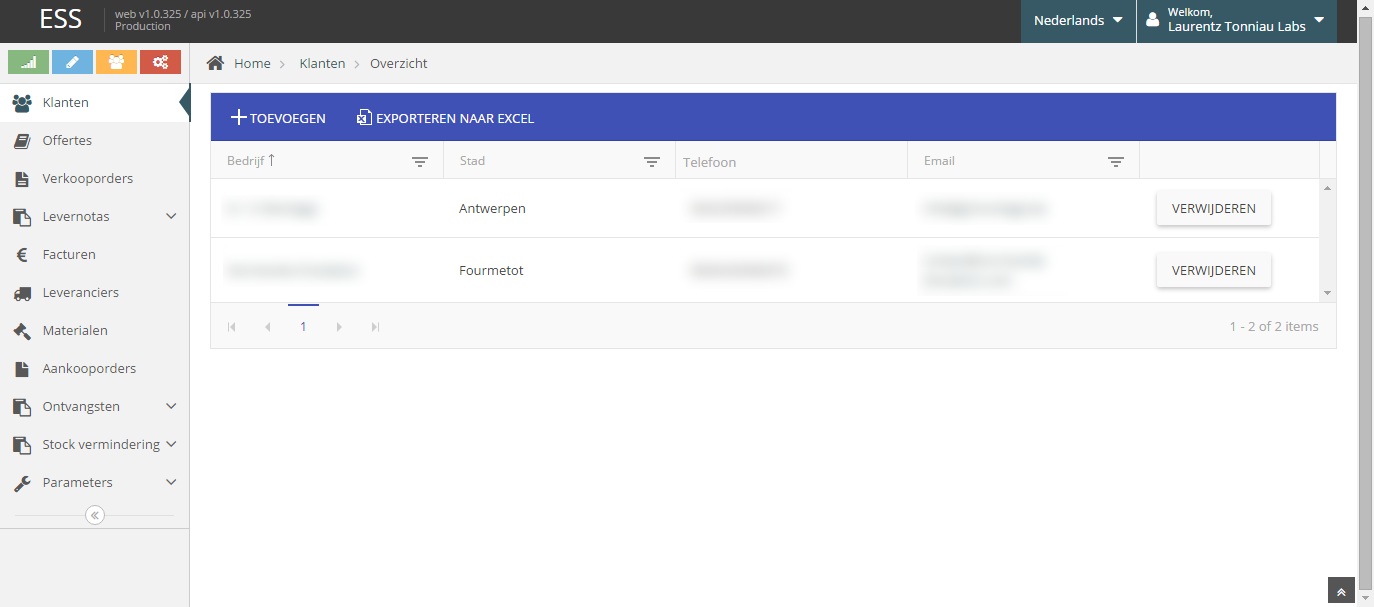
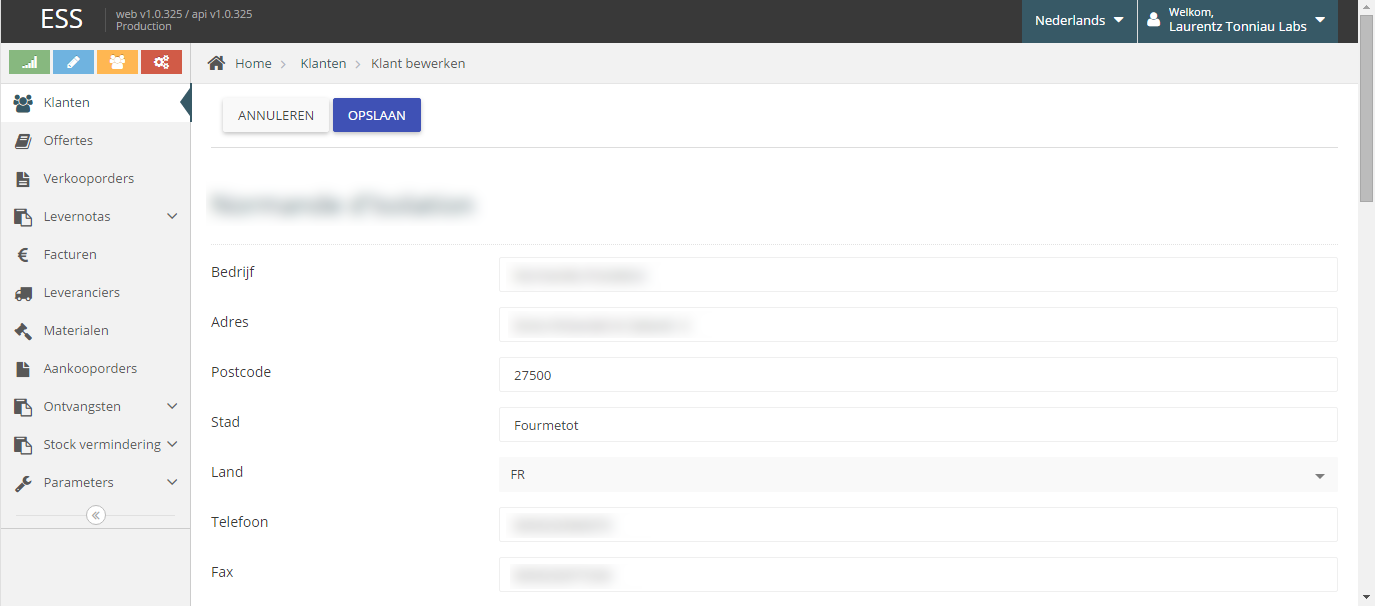
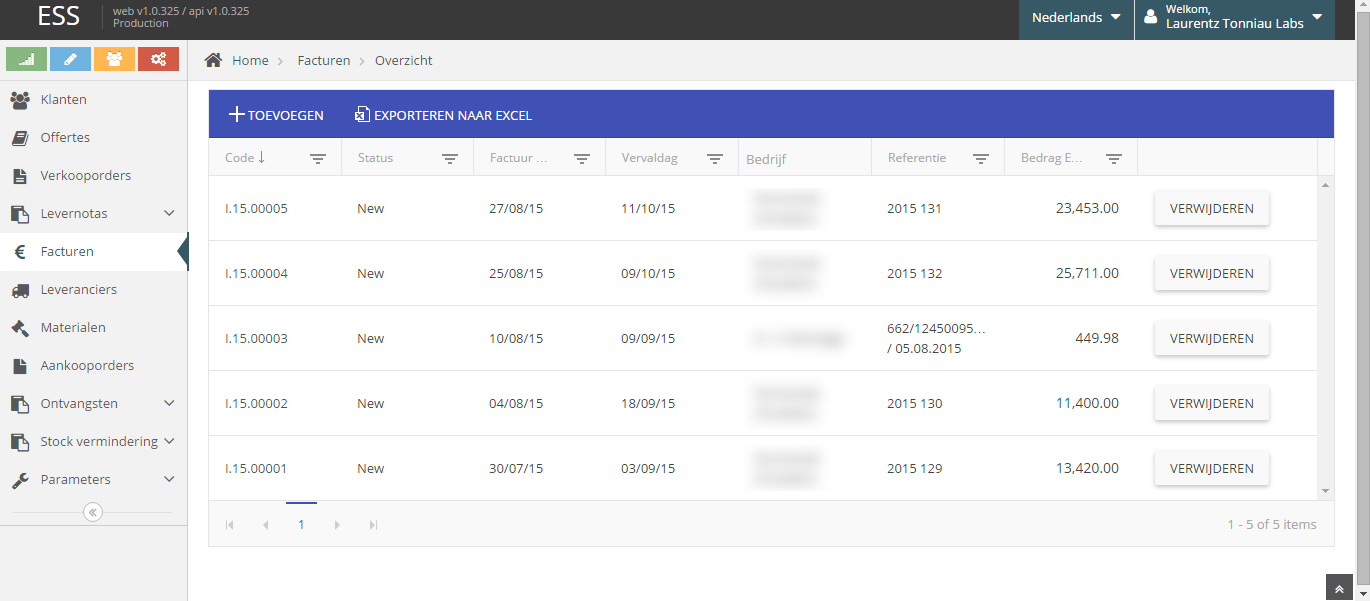
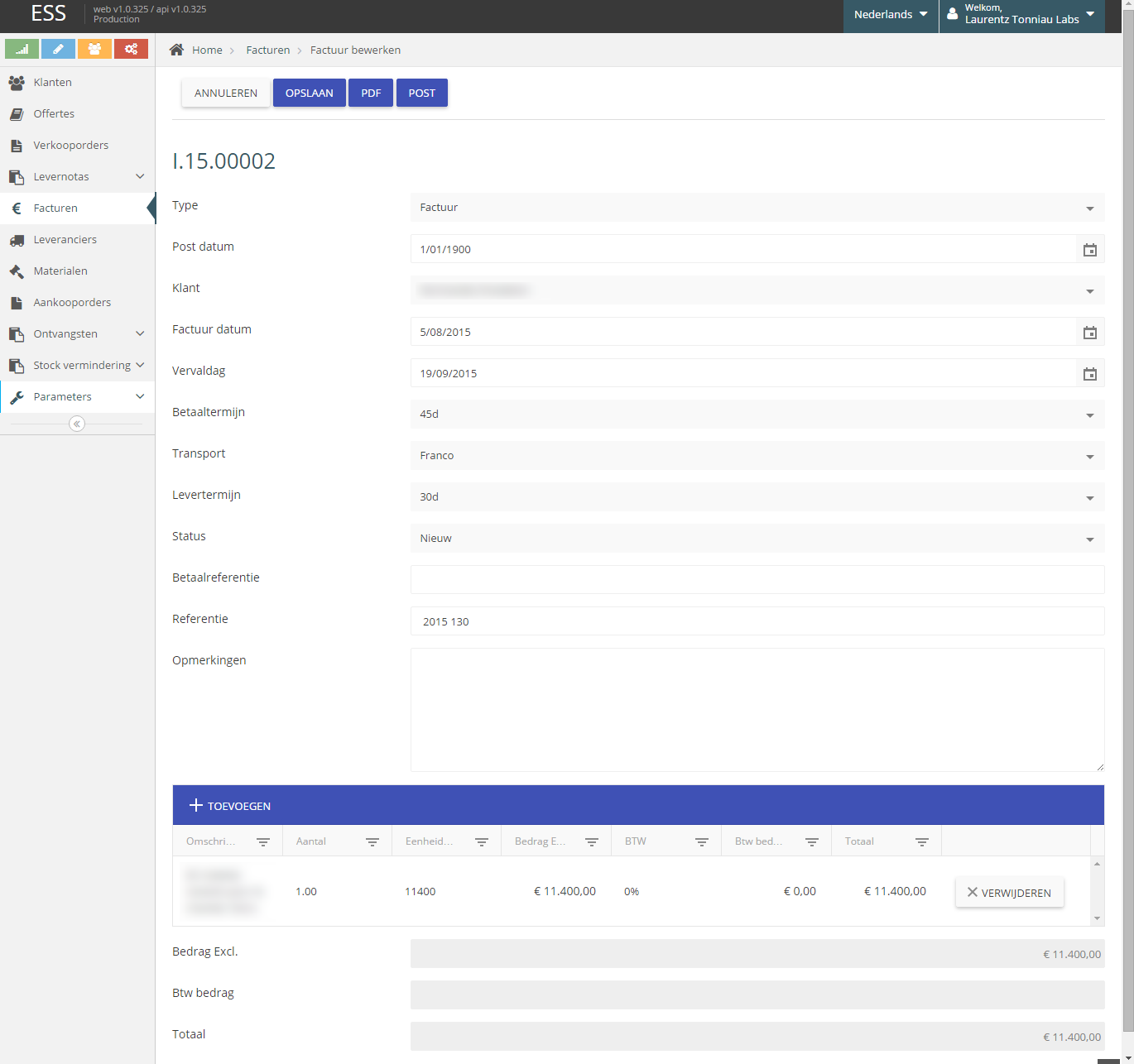
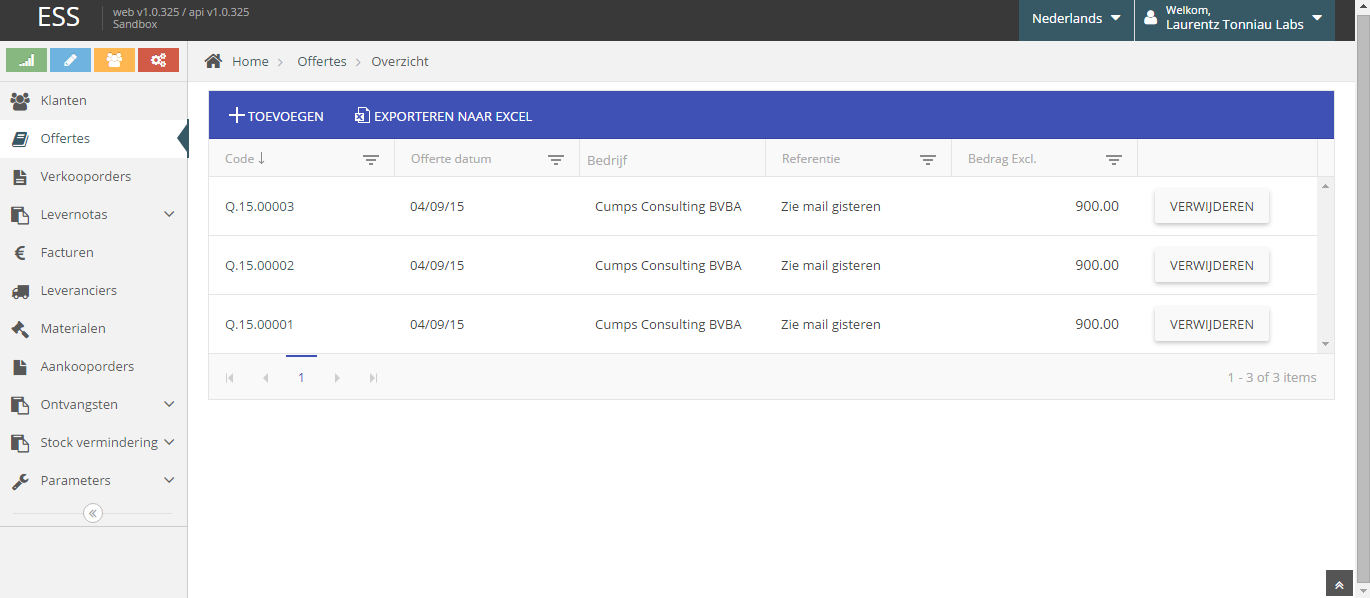
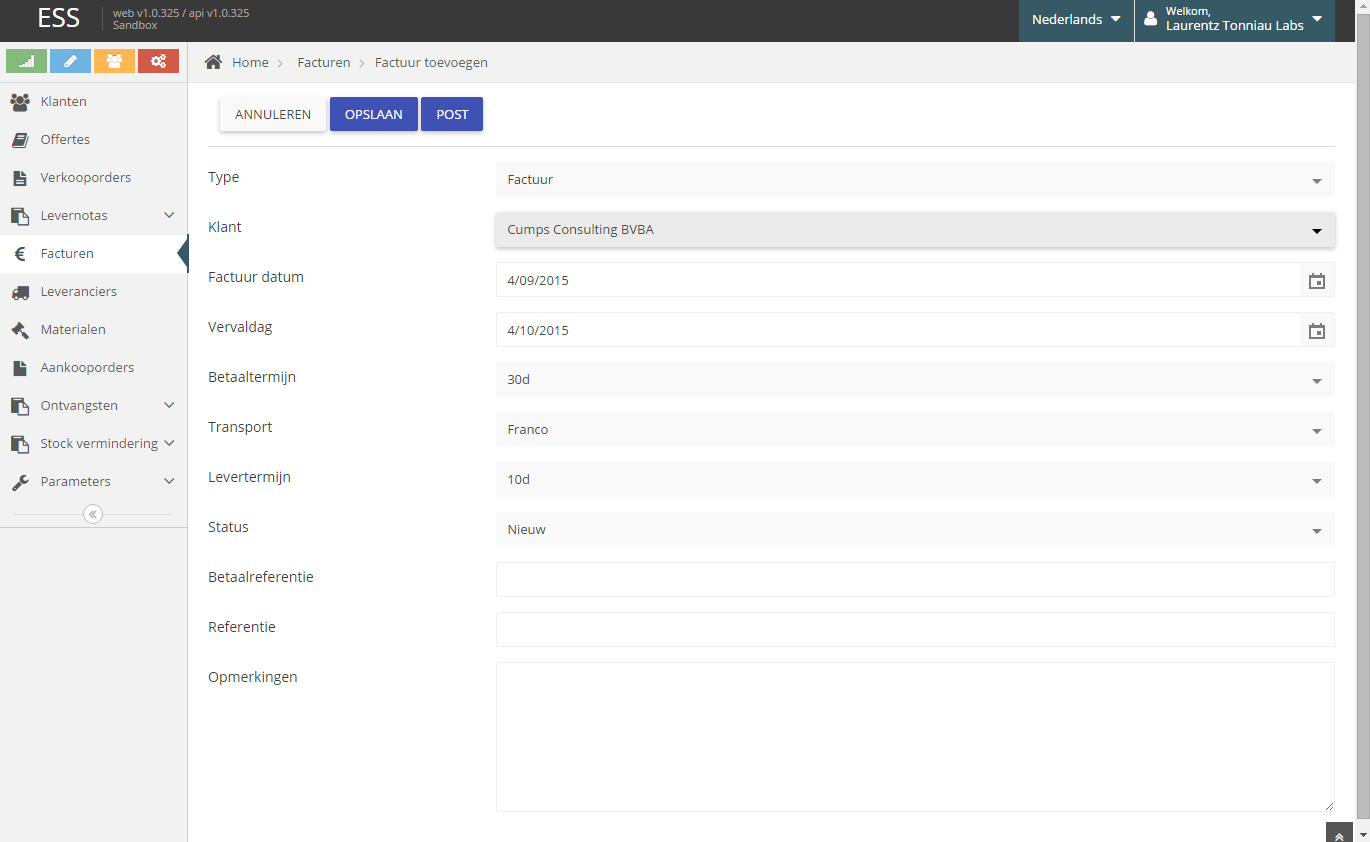
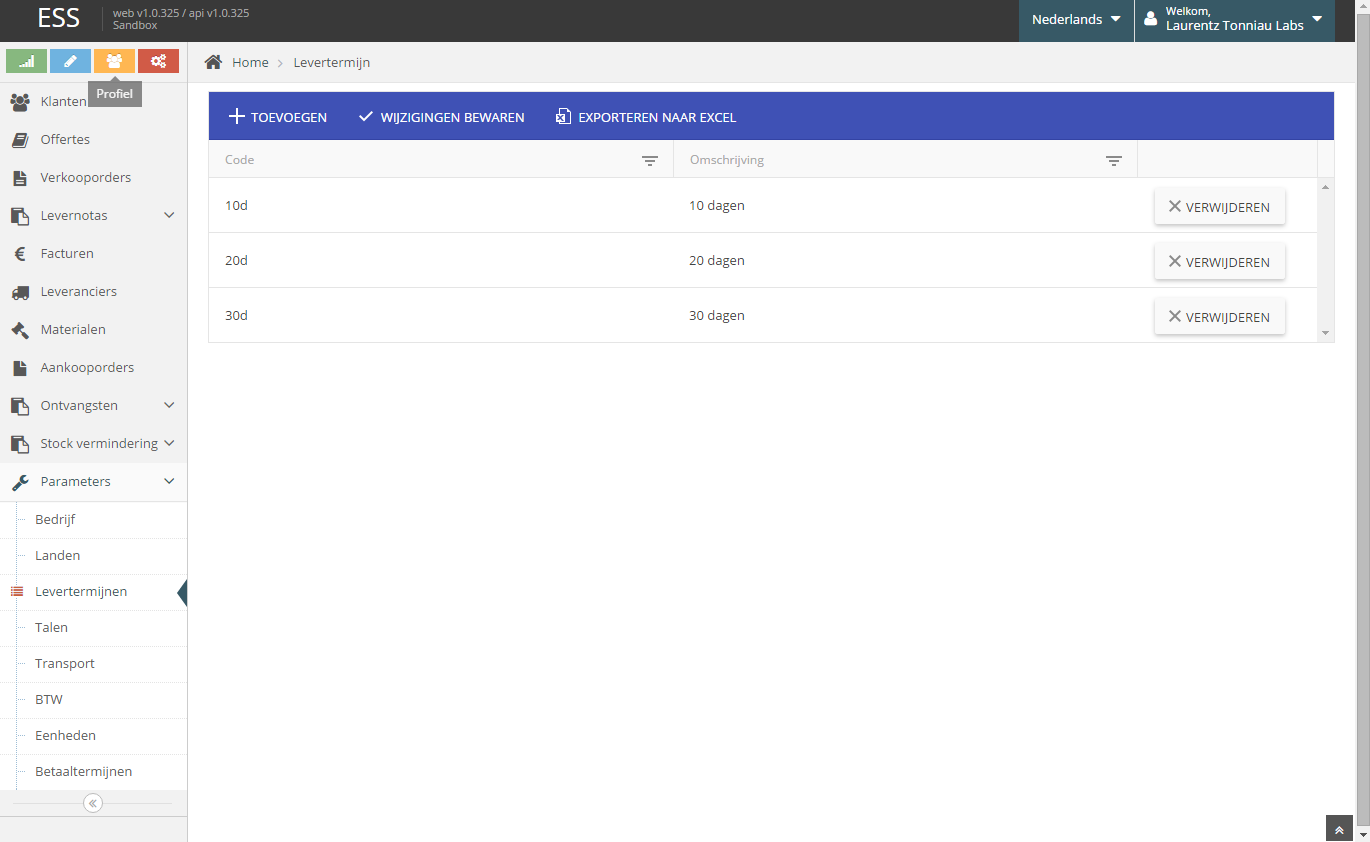
From quote to invoice. ESS covers the whole flow of the business: quotes, sales orders, purchase orders, goods received, delivery notes, stock movements and invoices, along with customers, suppliers, contacts and settings such as VAT rates and payment terms. Picking a customer fills in its payment terms and due dates. Documents come out as PDF reports in the customer’s language and can be sent by e-mail.
Built on GNaP. I built ESS on GNaP, the Angular and REST framework I had developed at Infrabel, for its sign-in, API versioning and data access. The back end is an ASP.NET Web API on Entity Framework, with code-first migrations and a written guide on handling them as a team. Breeze connects both ends, so the Kendo UI grids can add, change and delete many rows in one save, validated on both sides. Users sign in with their Office 365 account through Azure Active Directory, reports are made with DevExpress, and errors are logged with ELMAH.
Delivery. Code lived in Git on GitHub, TeamCity built every change, and Octopus Deploy released it to a sandbox and a production environment on Azure. The front end was built with Grunt and Bower and checked with JSHint, and an in-app release notes page told users what changed.
Technologies: .NET Framework 4.5, C#, Scrum, ASP.NET Web API, OWIN, Angular, Kendo UI, Breeze, GNaP, StructureMap, MediatR, Entity Framework, SQL Server, DevExpress Reports, ELMAH, Azure, Azure Active Directory, Office 365, ADAL, REST, HTML 5, CSS 3, Git, GitHub, TeamCity, Octopus Deploy, Bower, Grunt, JSHint, Cmder, Atom.

David got an eye for detail and has a very good focus on the scope of projects.



You May Also Like

The Family Vault: Vaultwarden
A Bitwarden-compatible password manager on the platform: split routing around end-to-end encryption, and the honest state of the rollout.

One URL for Everything: the Family Dashboard
The family dashboard, the fastest epic of the project, and container status tiles without handing anyone the Docker socket.

How This Blog Is Served
The machinery behind the words you're reading: Hugo, an unprivileged nginx, a strict CSP, and a deploy script.